Vanity
Became a subscription — you print a new face every week until there's no original left underneath.
Satire of now, costume from later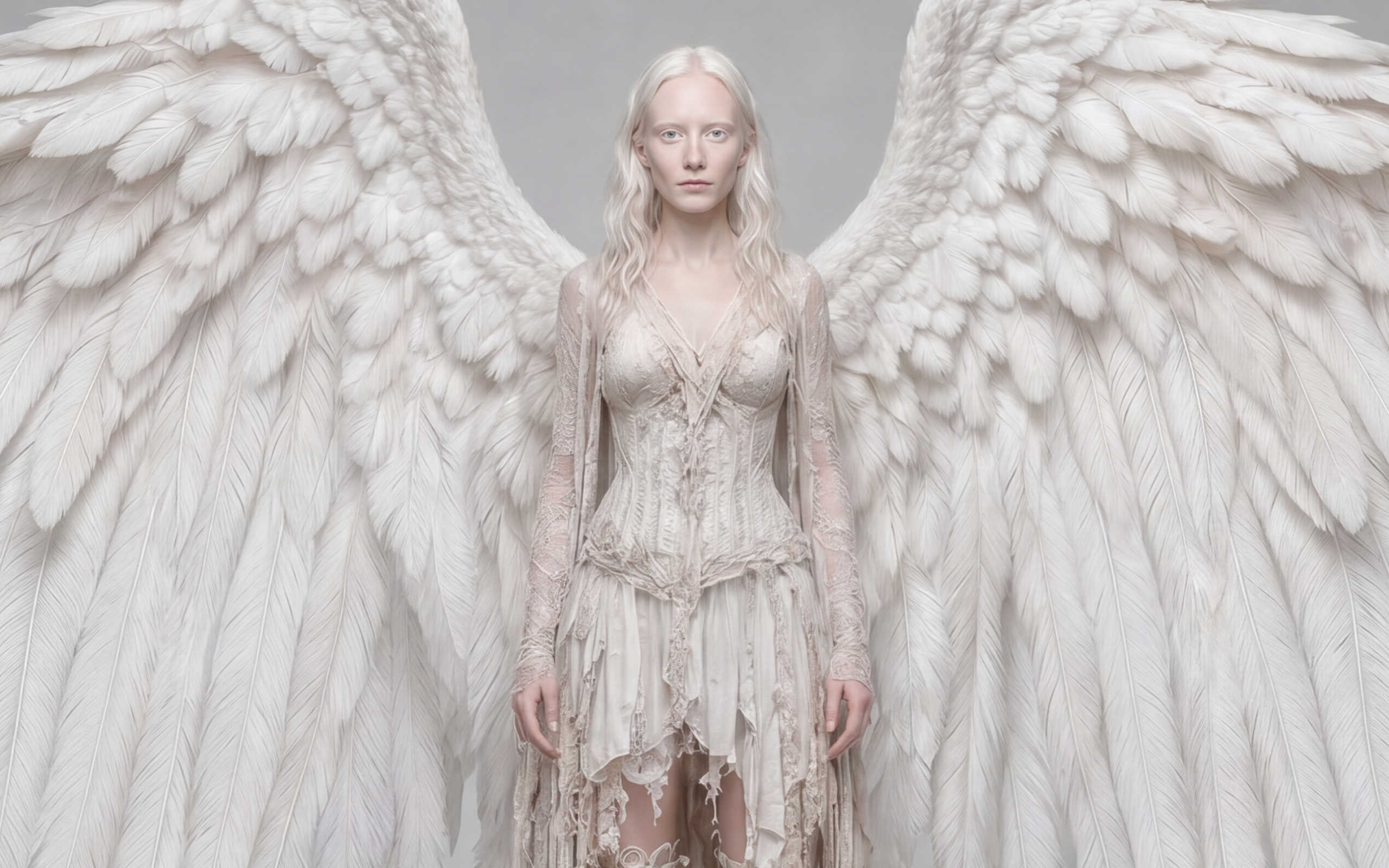
A cinematic AI short-film series set in 2365 — and the system built to make it. Angels keep falling into the wreckage of a species that had every chance, and they can't stop watching.
Anthology, one angel each
20s · 1080×1920 · 24fps
11 days
Ep. 01 in the edit
In 2365, angels keep falling into the wreckage of a species that had every chance — and they can't stop watching.
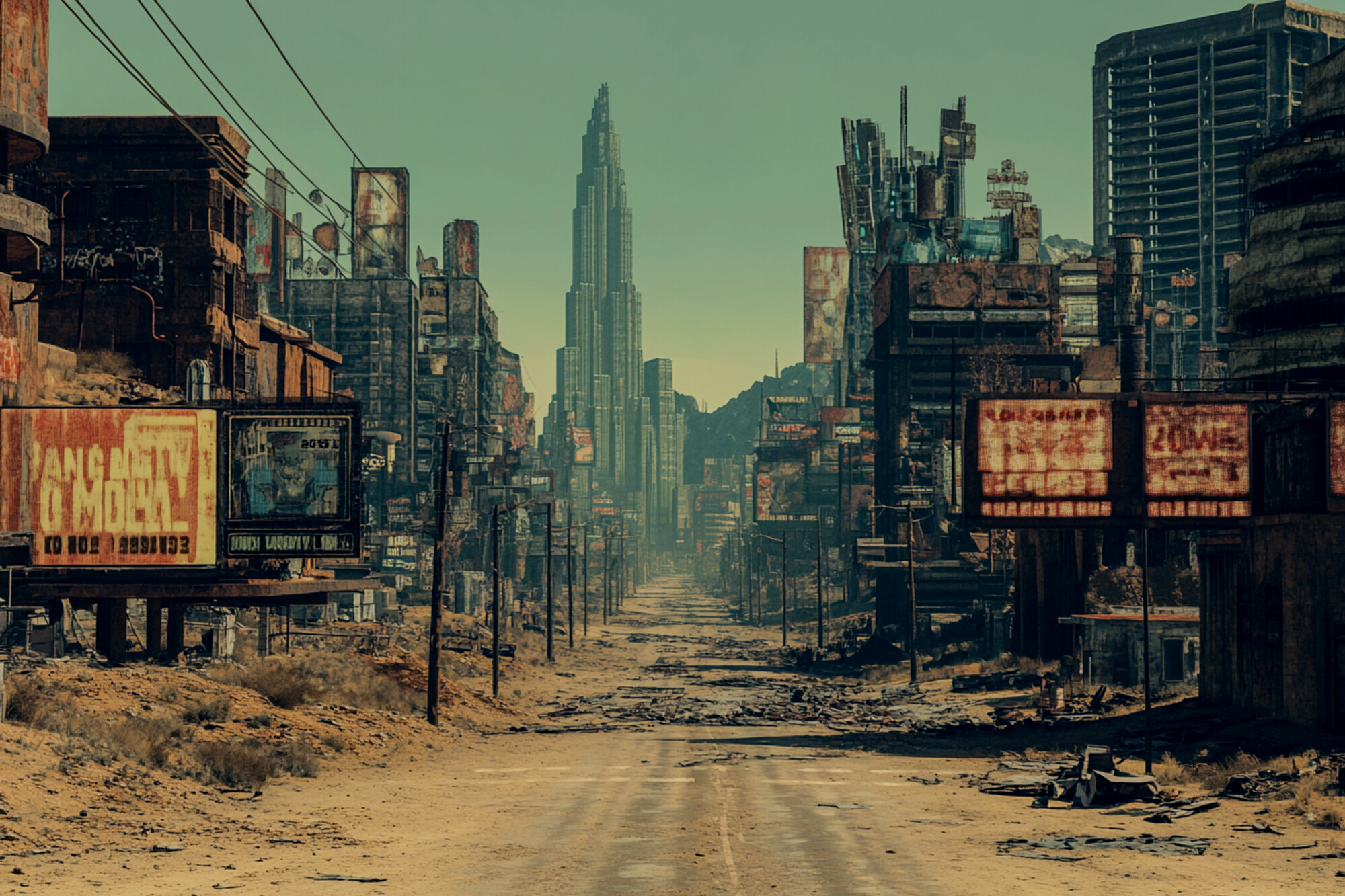
Humanity survived everything — unlimited energy, synthetic meat, minds made of math, centuries of extra life — and used all of it to repeat the past. The future isn't bright. It's filthy, crowded and loud, holograms flickering over mold.
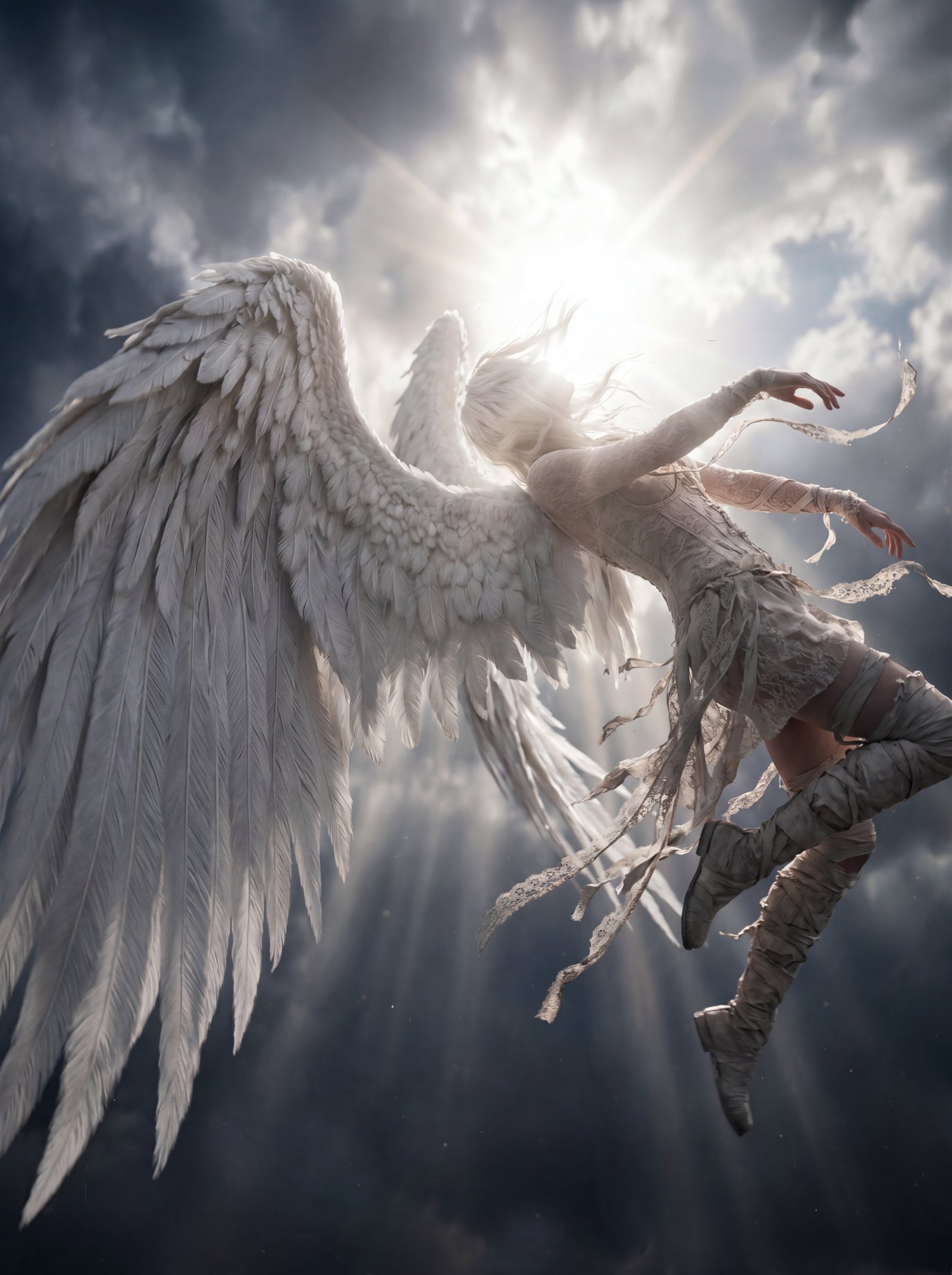
Each film follows one angel, first-person: dry, deadpan, unforgiving — until the last beat lands somewhere unexpectedly tender. A fall is a story, not a format. Episode 01 is Namaah's — the descent shown in full, ending in front of a puddle that hands her back her own face.
Anthologies fail for a structural reason: if every episode changes the character, the sin and the setting, nothing accumulates. Audiences don't get attached to a format. They get attached to a face and a feeling. So the first decision wasn't a story — it was a two-column table.
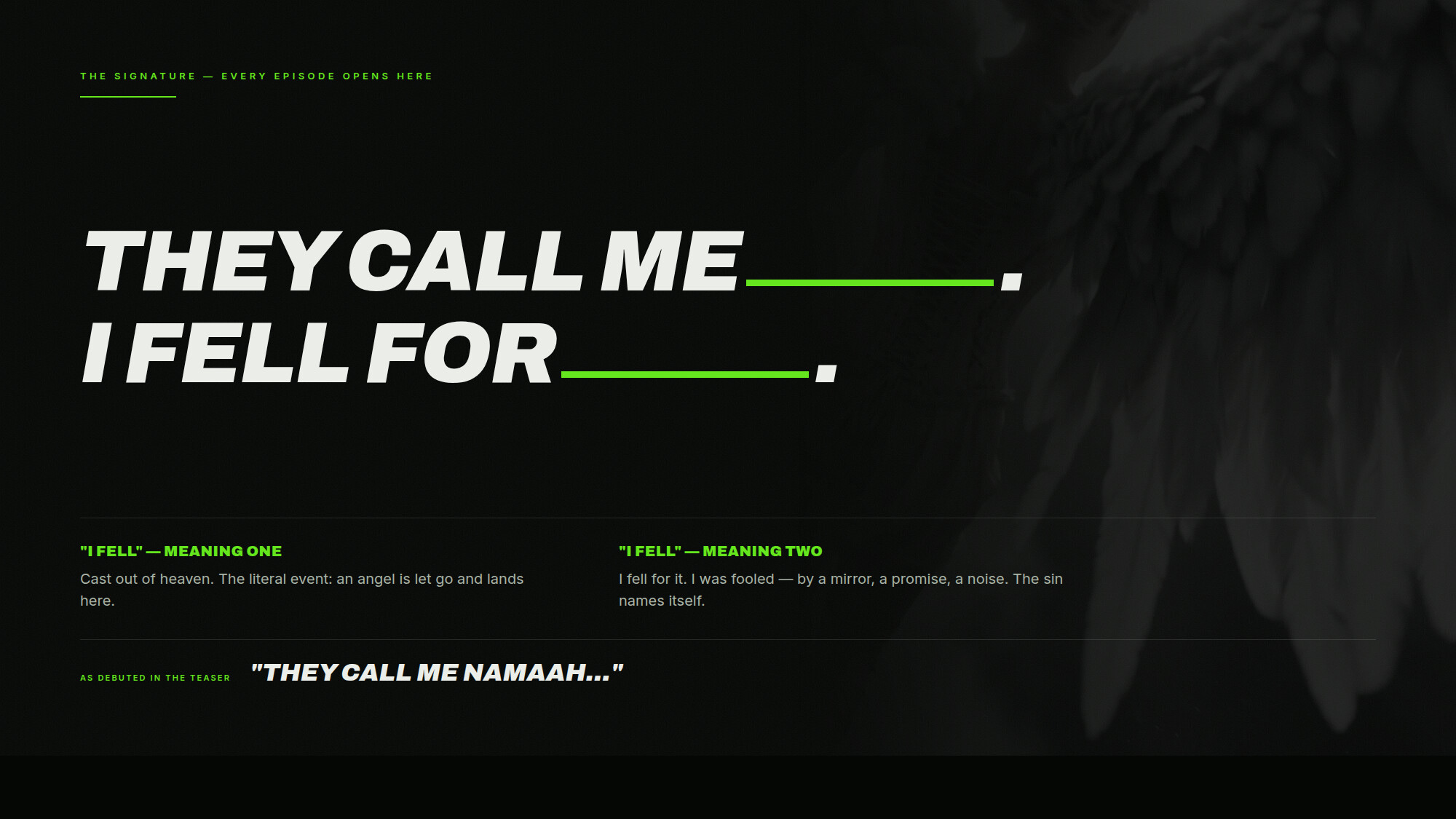
“They call me ___. I fell for ___.”
Chosen because it cuts both ways. I fell means cast out of heaven — and I fell for it, I was fooled. One line delivers a name, a sin, a tone, and a joke that is also a wound. It also means nobody ever needs to have seen the previous episode.
We debuted it in the teaser, before the series had a single episode to its name. That's how a signature gets built: you plant it before it means anything, and let the audience recognise it later.
Six habits humanity never dropped — vanity, love, hustle, outrage, wellness, mortality — and one rule underneath them: technology changes, the mistake doesn't. Each habit gets asked a single question: what shape does this take in 2365?
Became a subscription — you print a new face every week until there's no original left underneath.
Satire of now, costume from laterThree shifts in a post-scarcity economy, worked to afford premium air.
Satire of now, costume from laterEnlightenment with a buffering bar.
Satire of now, costume from laterStill the oldest bad decision — now with better documentation.
In the pipelineFaster than light, and just as impossible to take back.
In the pipelineOptional, expensive, and still the only thing that makes anything matter.
In the pipelineNo torn feathers, no burns. The world can only stain them. That is the show's entire theme in one image: the fall doesn't break you, living down here just makes you dirty.
Pores, fine lines, natural shine. Plastic AI skin is banned outright — because texture is the hardest thing to hold across a generated series, and the most honest proof that someone did the work.
An angel moves through a crowd unnoticed. Opening them has to be earned inside the scene — which turns a VFX moment into a story beat instead of a firework.
Pure cynicism has a ceiling: it never makes anyone cry. So Namaah carries a hidden engine. She insists she is only watching. She intervenes anyway, every single time, because she quietly believes that if she helps enough humans she will be forgiven and let back in.
Contempt, then reluctant tenderness, then the question underneath it: am I helping them, or buying my ticket home? That ladder is what the series climbs.
“Heaven let go” — in a language invented for the series and explained nowhere. No caption translates it. No post decodes it. “What language is this?” is a comment the audience writes for you.
This is where most AI film work quietly falls apart: generate the same character twice and you get two different people. So nothing was generated until the assets that make generation repeatable existed.
Namaah was built first as a complete 4K reference library — front, three-quarter, side and back turnarounds, a face sheet of close-ups, and separate sheets for closed wings, open wings and costume. Every prompt afterwards is anchored to it.
The world got the same treatment: twelve high-resolution plates made purely to answer what 2365 looks like, before anyone asked what happens in the scene. Out of it came the canon palette — concrete greys punctured by toxic neon. The angel is warm. The world is cold.
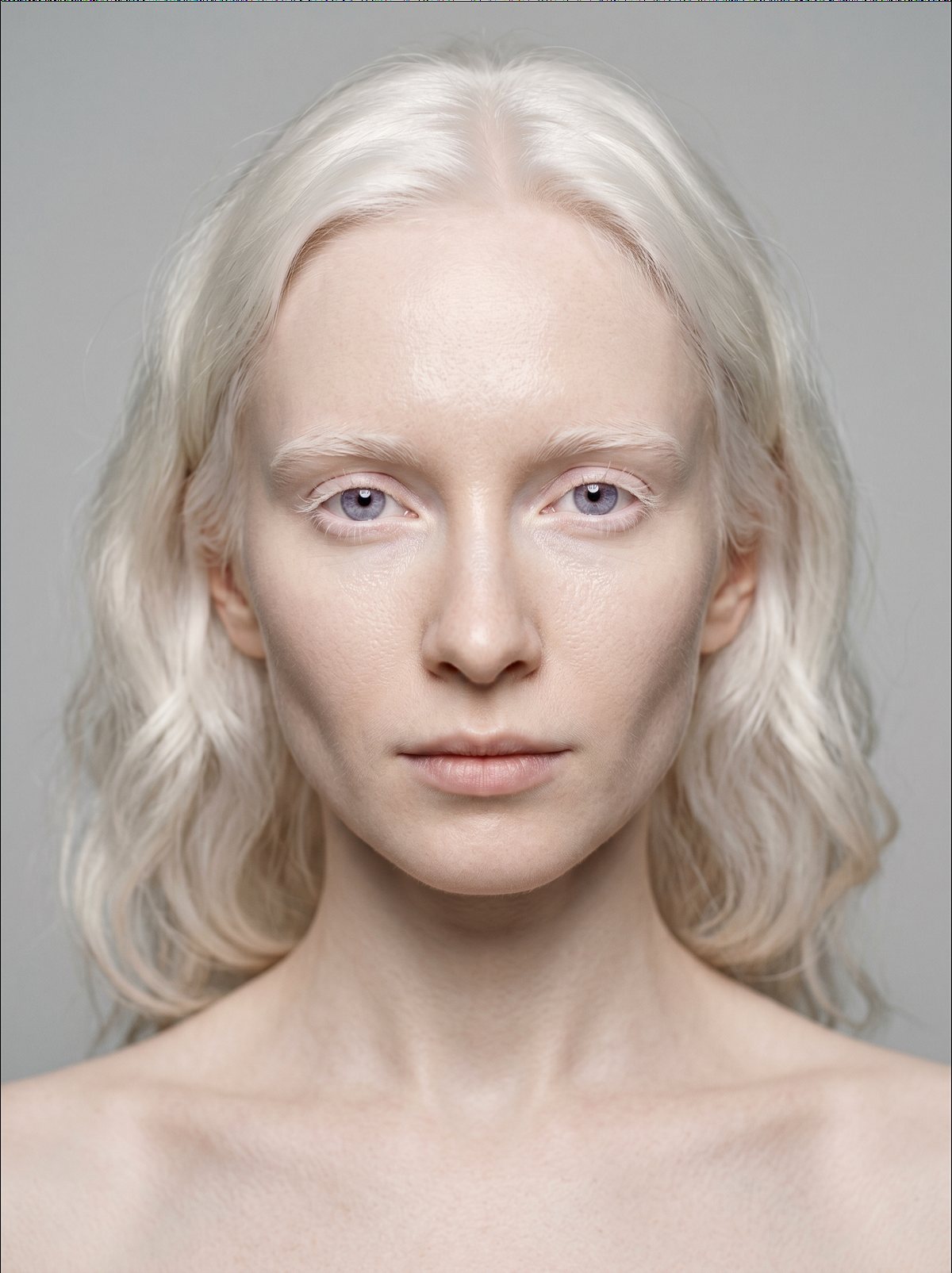 Face — the anchor
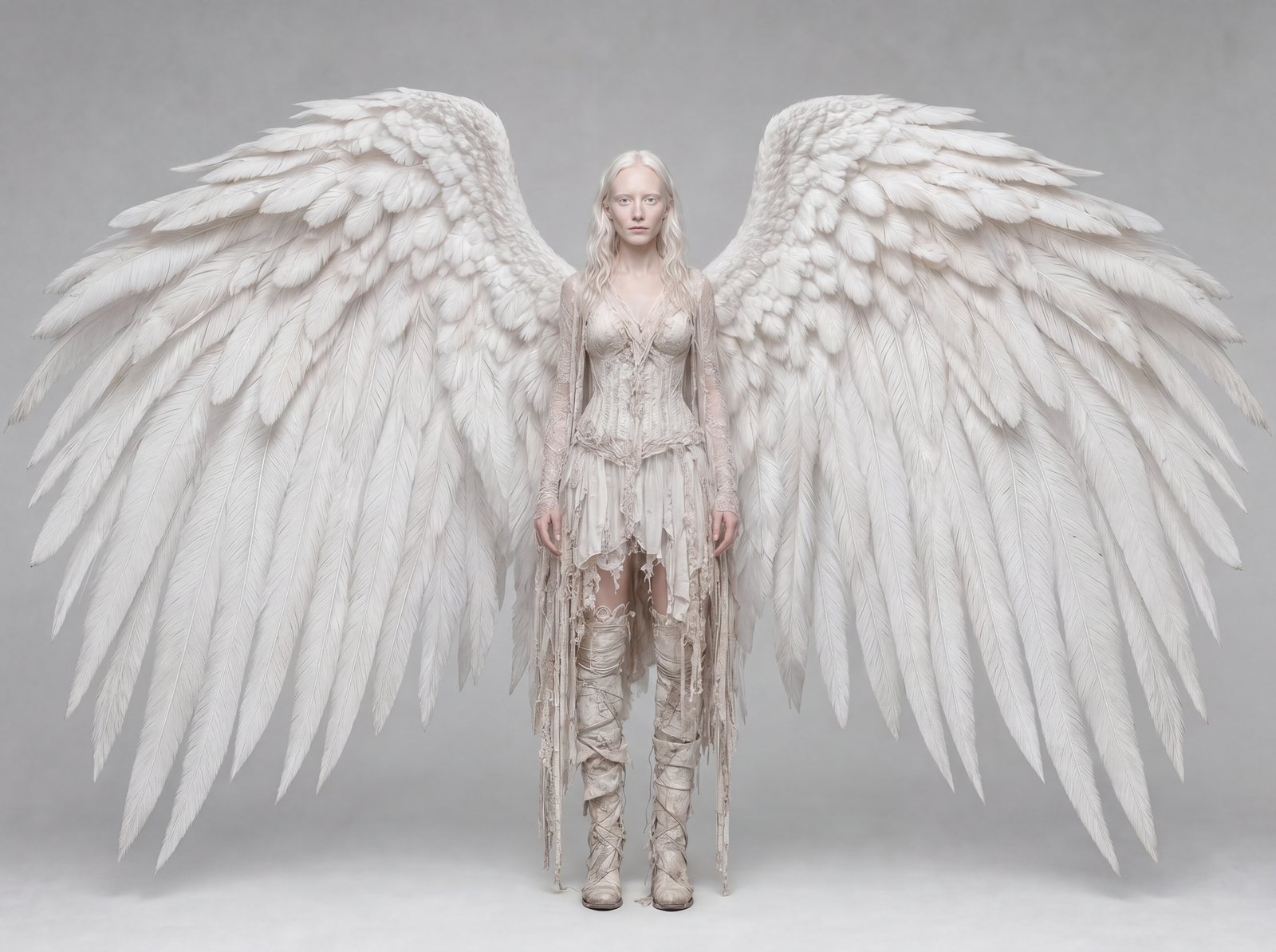 Open wings — front
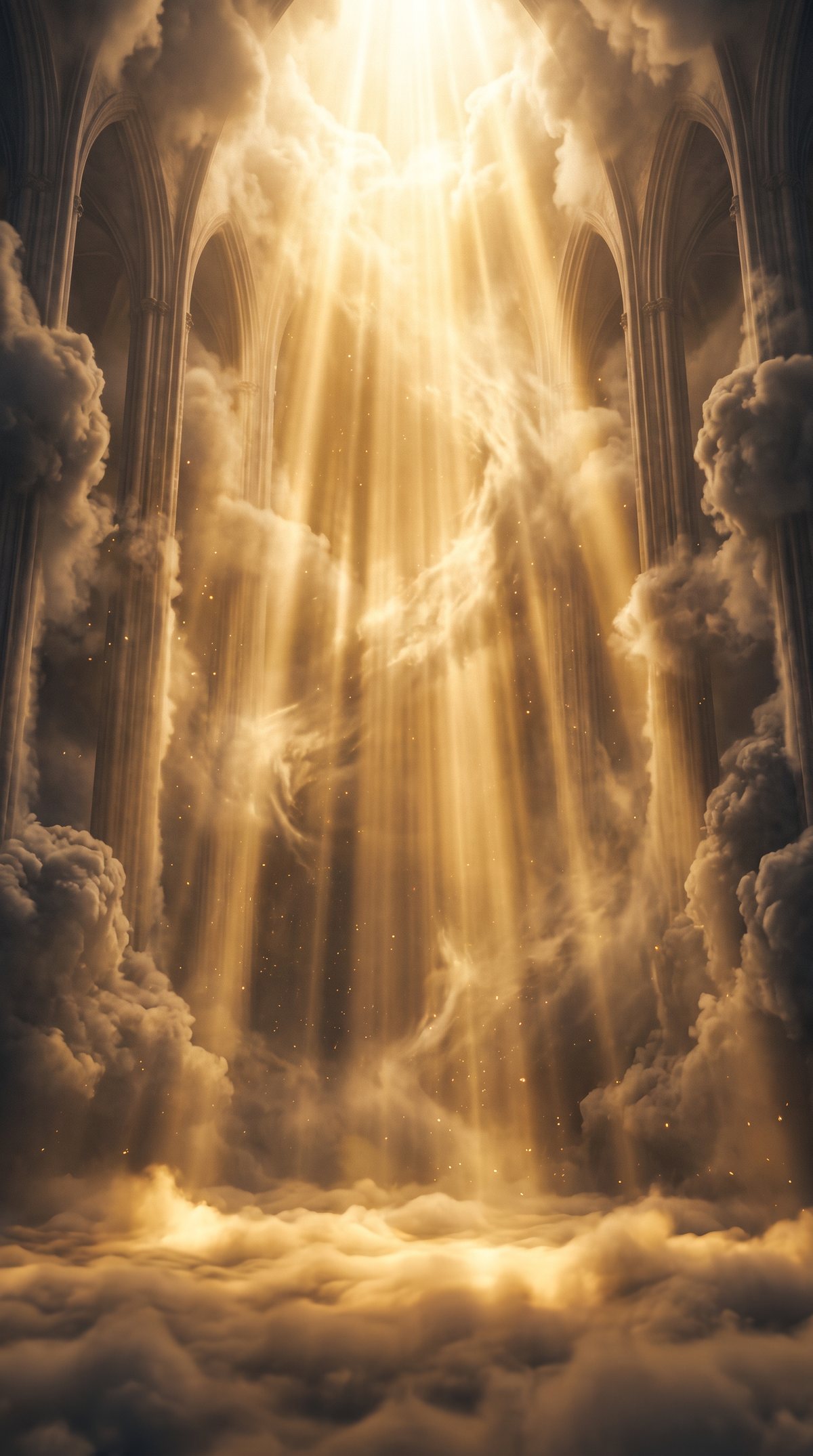 Heaven — plate 01
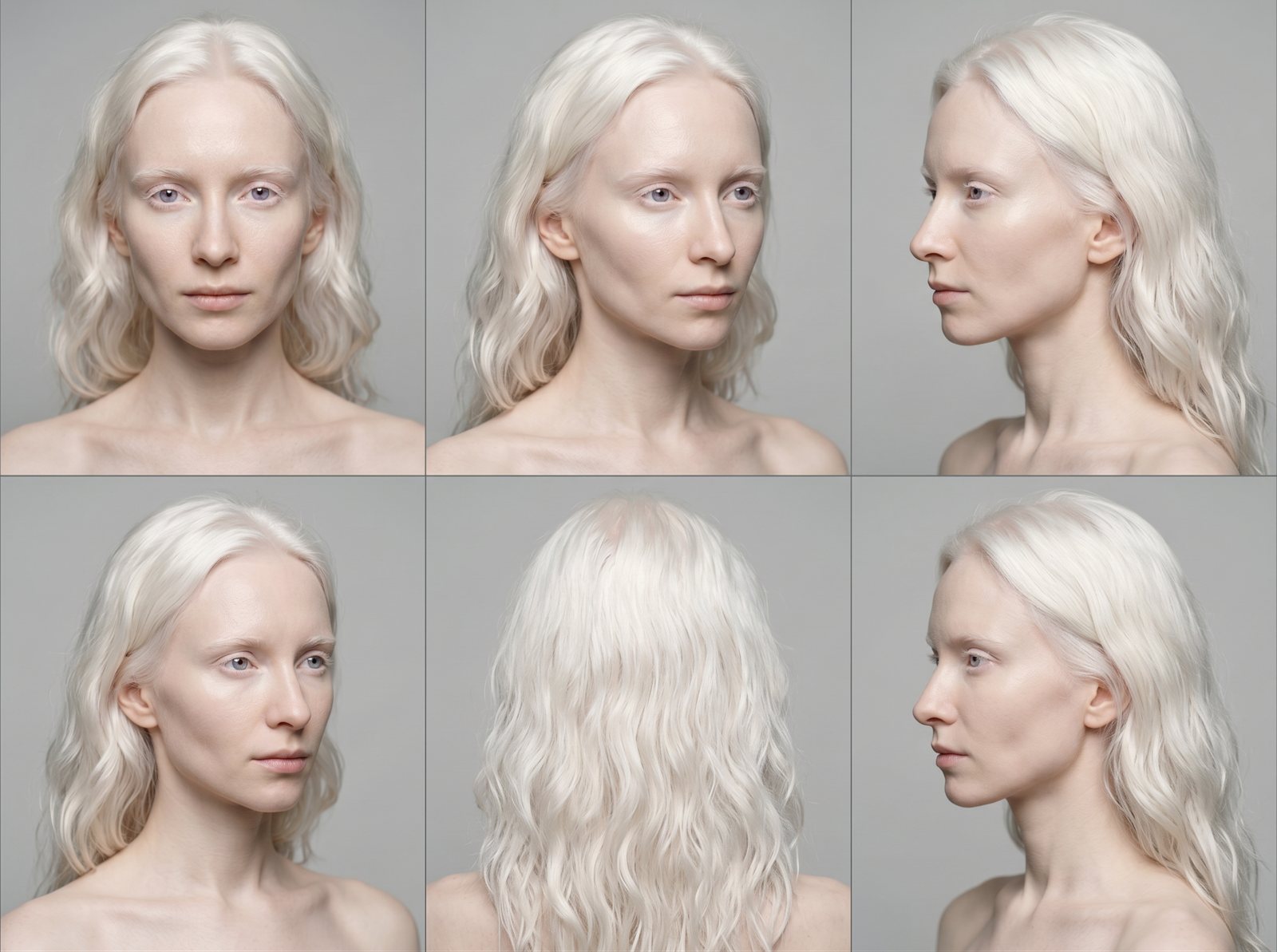 Face sheet — six views
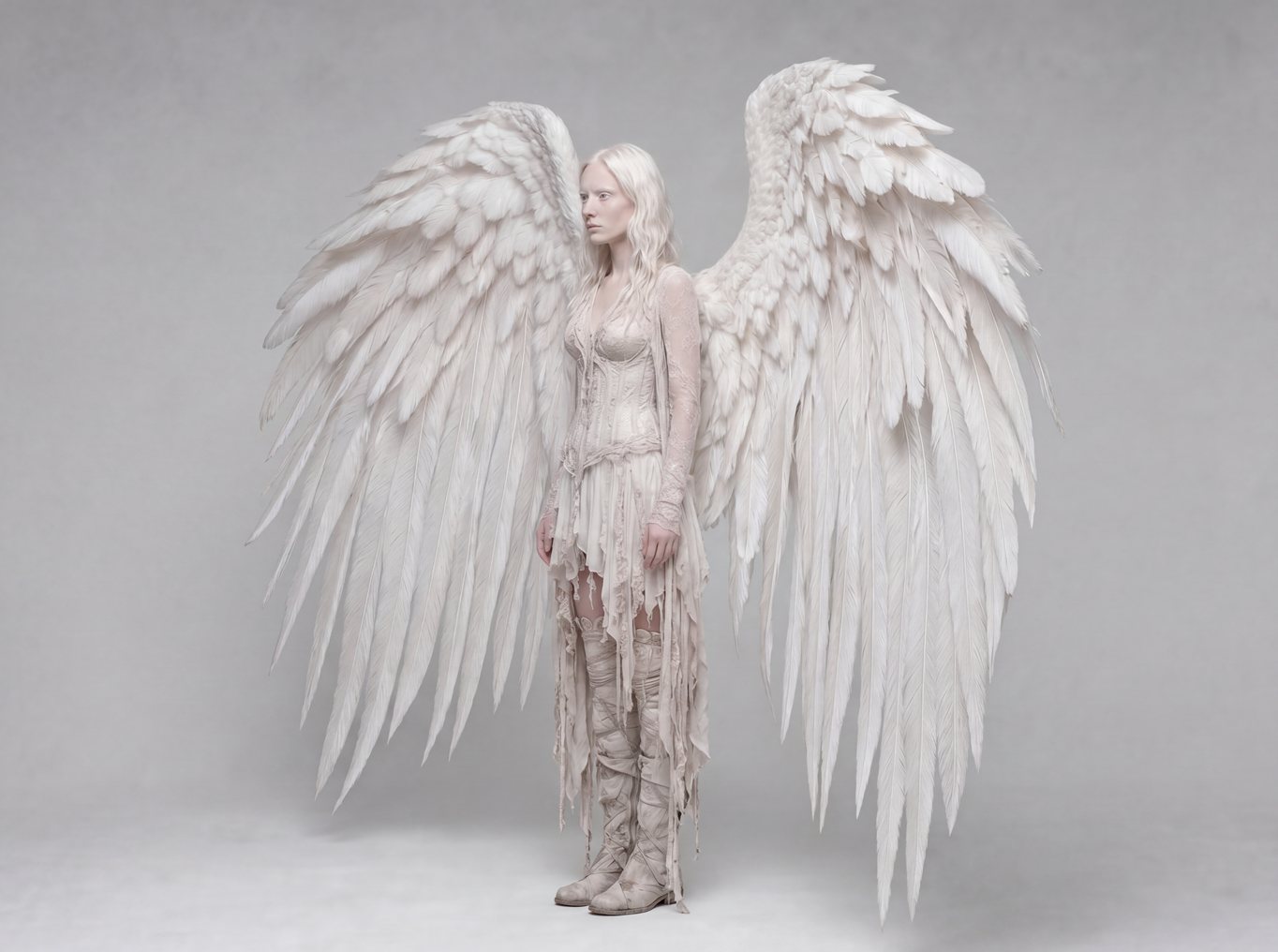 Open wings — 3/4
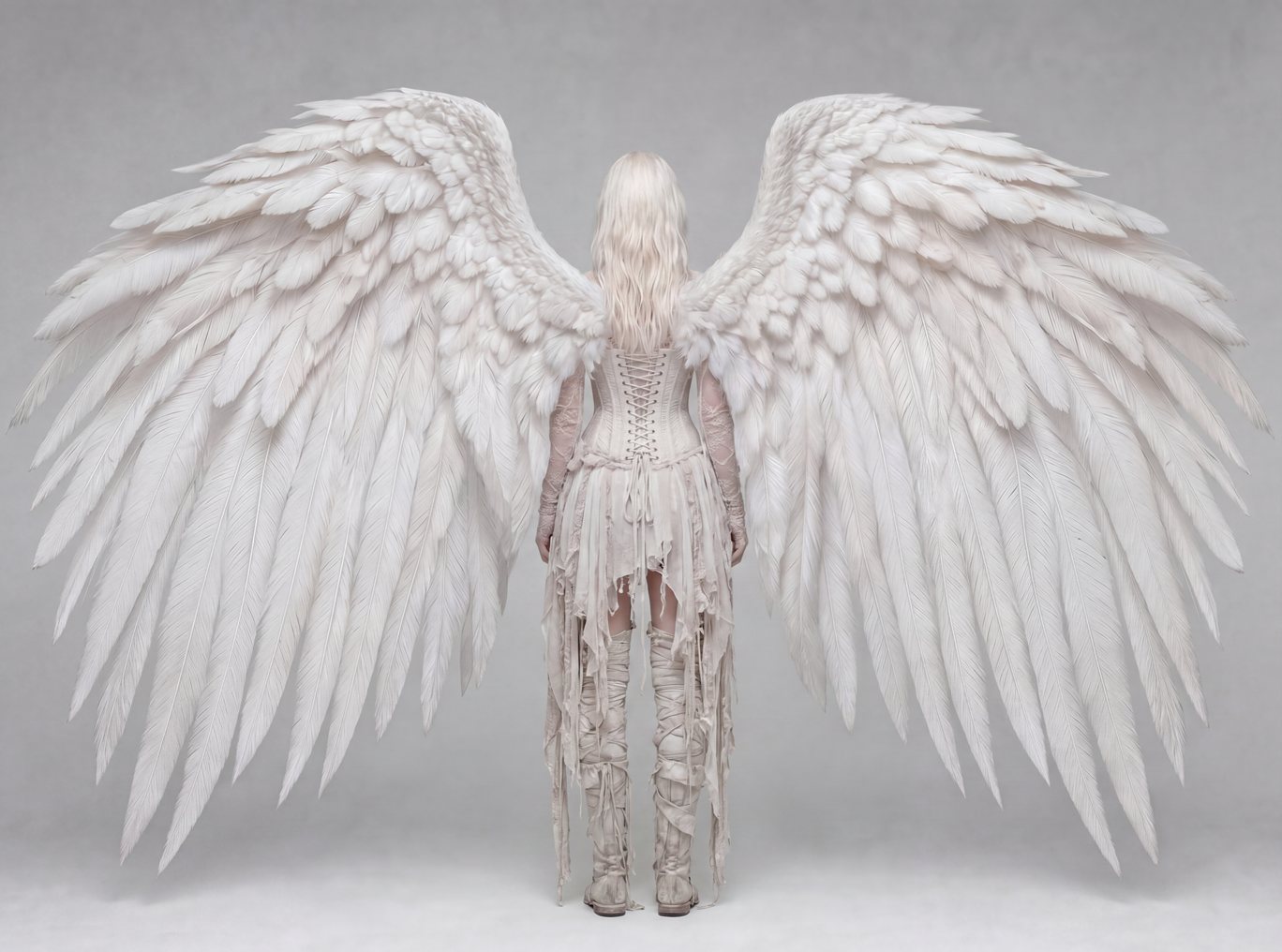 Open wings — back
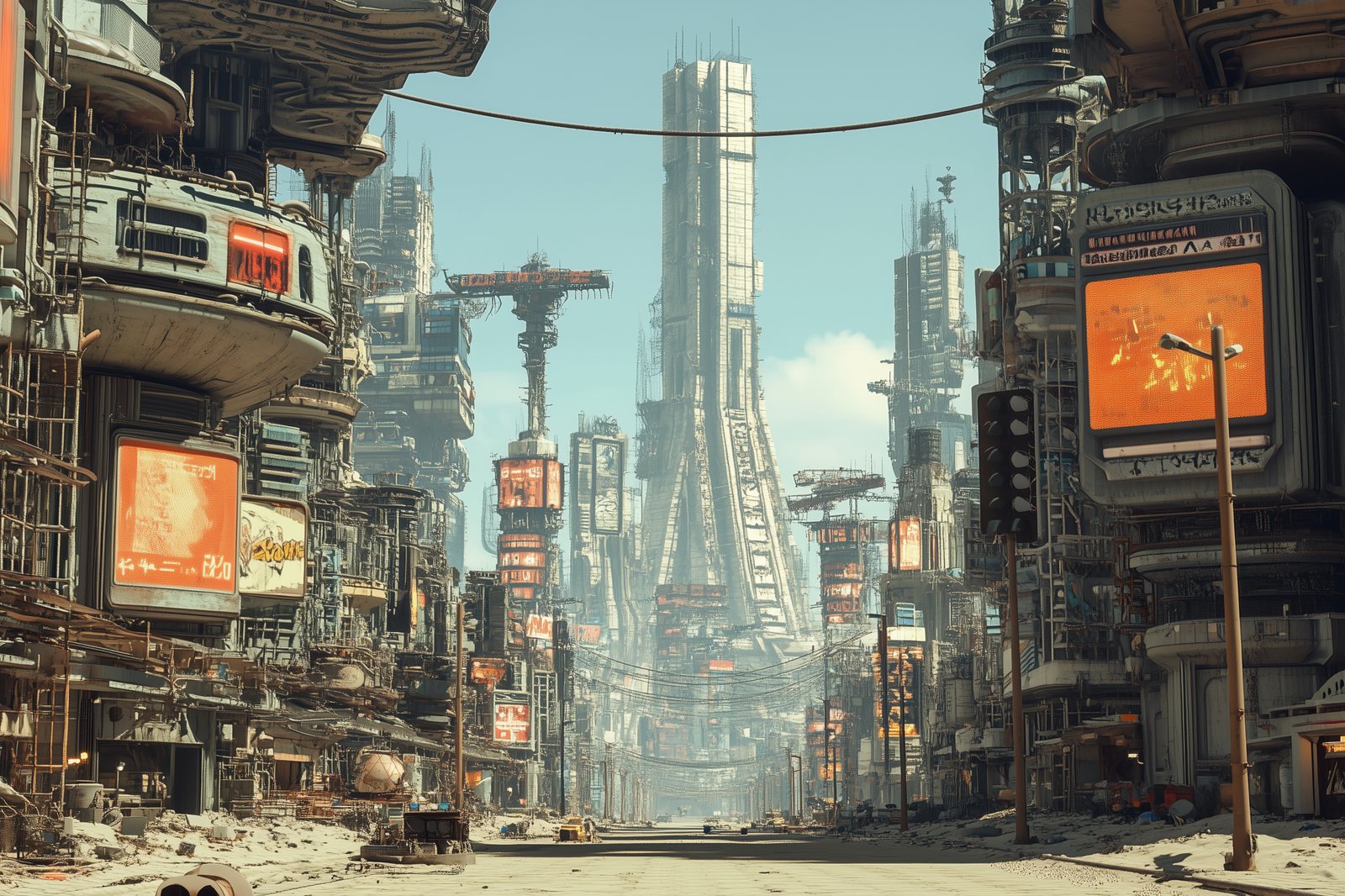 World 2365 — city plate
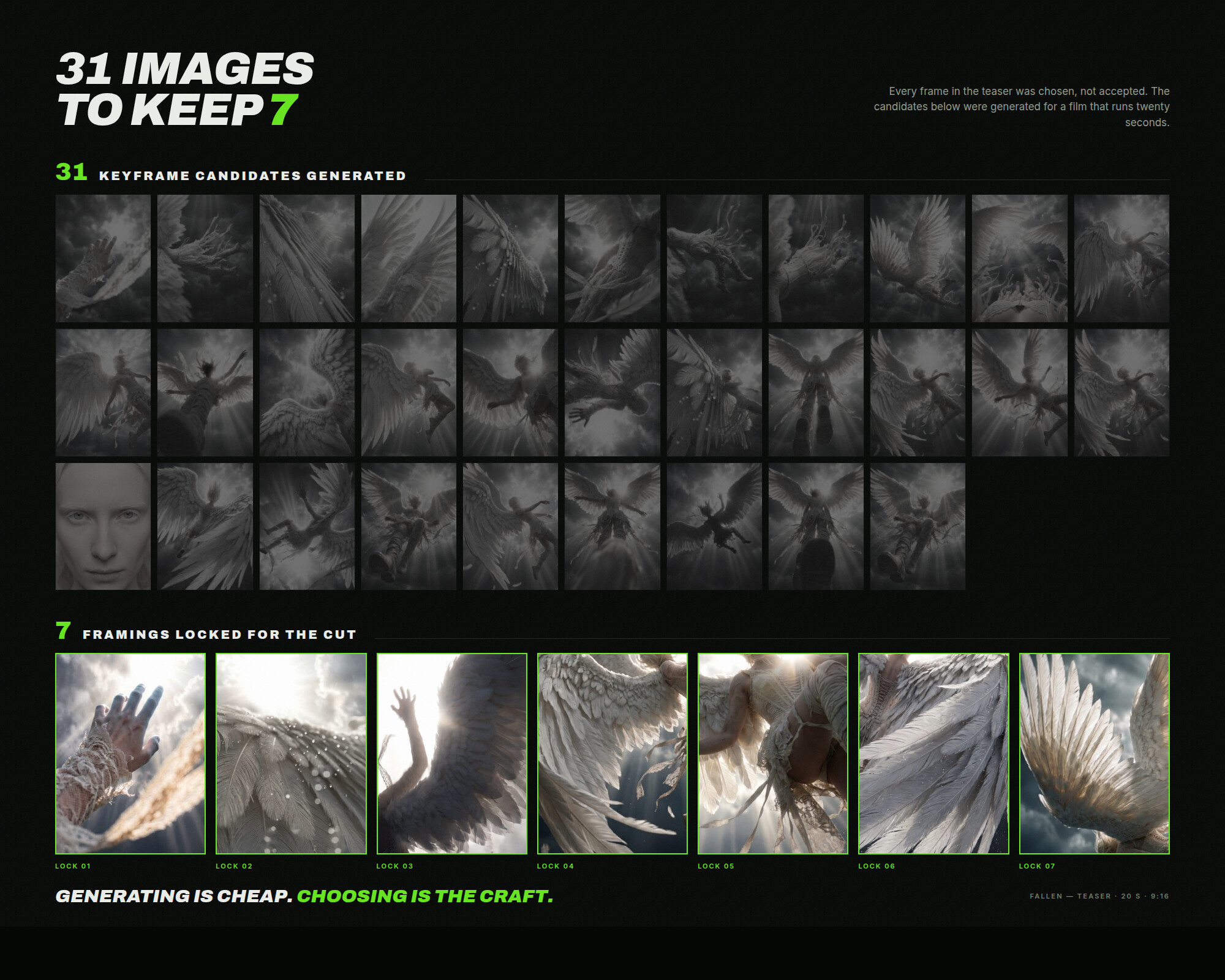
Episode 01 was fully storyboarded before a single frame was generated. The teaser then went through the funnel that describes how this pipeline actually works. Generating is cheap. Choosing is the craft.
Scripts arrive with a specification attached — this one from the Vanity episode. Two assumptions shape the form: around 85% of viewers watch muted, so every line is burned into the frame and the biggest reveal lands in silence; and the last frame hard-cuts to the first, so the film loops — the closing line is literally the reason it starts again.
Hooks are never a single guess. Three are written and scored against retention, shareability and topicality; the strongest is shot, the runner-up is kept for testing. Then four quality gates — including one that bans engagement bait and requires every promise the opening makes to be paid off on screen.
Two sounds are the series' memory.A cathedral hum when wings open · a single water drop at the puddle
Nothing is borrowed. The teaser runs on an original instrumental written for it; Episode 01 has its own theme, shaped around the descent. Namaah's voice is locked — one deep, deadpan, tired English voice, now as fixed as her wings, with every future angel getting their own.
When either reserved sound comes back, the audience feels the connection before it can name it.
Strategy locked 8 July. Finished master out 19 July. Score written on the 14th, voice on the 17th, shots rendered across the 17th and 18th, edit and master on the 19th. Episode 01 began the same week — script and storyboard on the 24th, theme on the 25th, voice on the 26th, keyframes on the 27th, principal generation through the 31st. It is in the edit now.
| Teaser master | 20 s · 1080×1920 · 24 fps |
| Keyframes generated → locked | 31 → 7 |
| Video takes rendered | 14 |
| Original score | 1, written for the teaser |
| Voice | 1 locked, 2 takes |
| Approval gates | 6, human sign-off before full render |
The pipeline is the product.Not a prompting exercise — a designed fiction with rules it obeys
The series is the proof.